CLICK HERE TO DOWNLOAD YOUR HEALTHYSTART™ GUIDE


The Complete Wisdom Tooth Extraction Guide for Tomball TX Patients

Wisdom teeth, for most people, are a third set of molars that appear in the late teens or early twenties. While some people never have any problem with their wisdom teeth, others suffer pain, swelling, or complications. If you feel discomfort or other issues with your wisdom teeth, it may be time to discuss extraction.
Whether your issues stem from impacted wisdom teeth or you’d simply like to nip potential problems in the bud, knowing the process is vital. In this blog, we will discuss everything you need to know about wisdom tooth extraction in Tomball. From reasons for removal to the procedure itself and how to prepare for a smooth recovery, you’ll get it all here.
Why Is Wisdom Tooth Extraction Recommended?
Wisdom teeth extraction is a very popular dental procedure performed each day for patients in Tomball. So why do so many people have to get their wisdom teeth removed?
- Impaction: Wisdom teeth can become impacted, meaning they lack enough room to fully erupt. It may lead to discomfort, swelling, and the potential for infection.
- Crowding: If there isn’t sufficient space in the mouth, wisdom teeth can push against adjacent teeth and cause misalignment or damage.
- Decay and Infection: Wisdom teeth are located at the back of the mouth and are often difficult to clean thoroughly. This can lead to cavities, gum infections, and other problems.
- Cysts or Tumors: Although rare, pressure from an impacted wisdom tooth may also give rise to cysts or tumors, which can lead to more complex problems and damage to adjacent bone.
What To Expect During Wisdom Tooth Removal?
While the process of wisdom tooth extraction in Tomball is usually simple, it can vary depending on the complexity of the procedure. Here’s an overview of what to expect along the way.
1. Consultation and Evaluation
Before the extraction, you will have an extensive consultation with your dental team. Your dentist will look at your medical history and take X-rays of your mouth during this visit to determine where your wisdom teeth are located. These X-rays help assess whether the teeth are impacted, fully erupted, or growing at an awkward angle. Based on this assessment, your dentist will develop an individualized treatment plan for the extraction procedure.
2. Anesthesia
The anesthesia used during your procedure will depend on the complexity of the extraction and your comfort level. Your dentist will also talk to you about the anesthesia options: a local anesthetic, which is intended only to numb the area involved; sedation, which helps to relax you; or general anesthesia, if being completely asleep through your procedure is what you’re most comfortable with. The idea here is to make sure you’re as comfortable as possible during the extraction.
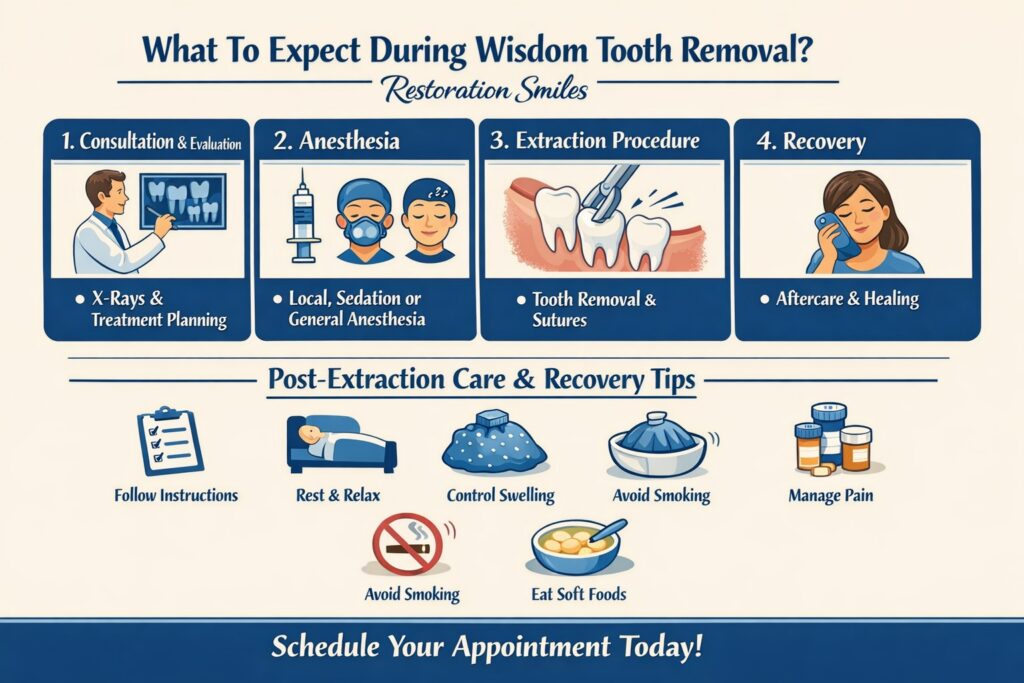
3. The Extraction Procedure
To reach the wisdom tooth, your dentist will create a small slit in your gum tissue. If the tooth cannot be easily removed in one piece, the dentist may break it into smaller pieces to make the extraction easier. Once the tooth is extracted, the area will be sutured to help with healing. Also, your dentist will give you instructions to follow for post-surgical care.
4. Recovery
In the immediate aftermath, swelling, pain, and bleeding are to be expected. That is normal and usually goes away after a few days. Ice the area for 24-48 hours to reduce swelling. Take it easy and follow your dentist’s aftercare instructions closely for an uncomplicated recovery. Most patients can return to normal activities in a week, but full resolution can take weeks.
Post-Extraction Care and Recovery Tips
The procedure itself is quite straightforward, but the post-op care you receive plays a major role in ensuring a successful recovery. Time heals tooth extraction the best.
- Follow Aftercare Instructions: your dentist will provide directions for caring for the extraction site. This can range from how to clean the area to what foods to eat to how to handle pain.
- Rest: Allow yourself adequate time to rest, particularly in the first day or two. Refrain from vigorous activity that may disturb the extraction site.
- Control Swelling: If you apply ice packs to the side of your face in the first few days, it may help reduce swelling and pain.
- Don’t Smoke: Smoking inhibits healing and increases the risk of complications, so do not smoke during recovery.
- Eat Soft Foods: For the first few days, eat only soft foods such as yogurt, mashed potatoes, and smoothies to minimize irritation at the extraction site.
- Pain Management: Your dentist might suggest over-the-counter pain relievers or give you something stronger to keep you comfortable as you heal.
Is Wisdom Tooth Extraction Suitable for You?
Whether or not wisdom tooth extraction is necessary will depend on several aspects of your oral health. Some people might be personally perfect and choose to have their wisdom teeth removed early to avoid any issues, while others should never have this done. Knowing the signs and when to get an evaluation is key to making the right decision.
- Pain or Discomfort: You may feel pain in the back of your mouth, particularly around your gums or jaw.
- Infection or Swelling: If you have an infection around your wisdom teeth, along with swelling or redness, extraction may be necessary to prevent the infection from spreading.
- Impacted Teeth: If wisdom teeth do not have sufficient room to emerge properly, they can become impacted, causing pain, damaging adjacent teeth, and leading to gum infections.
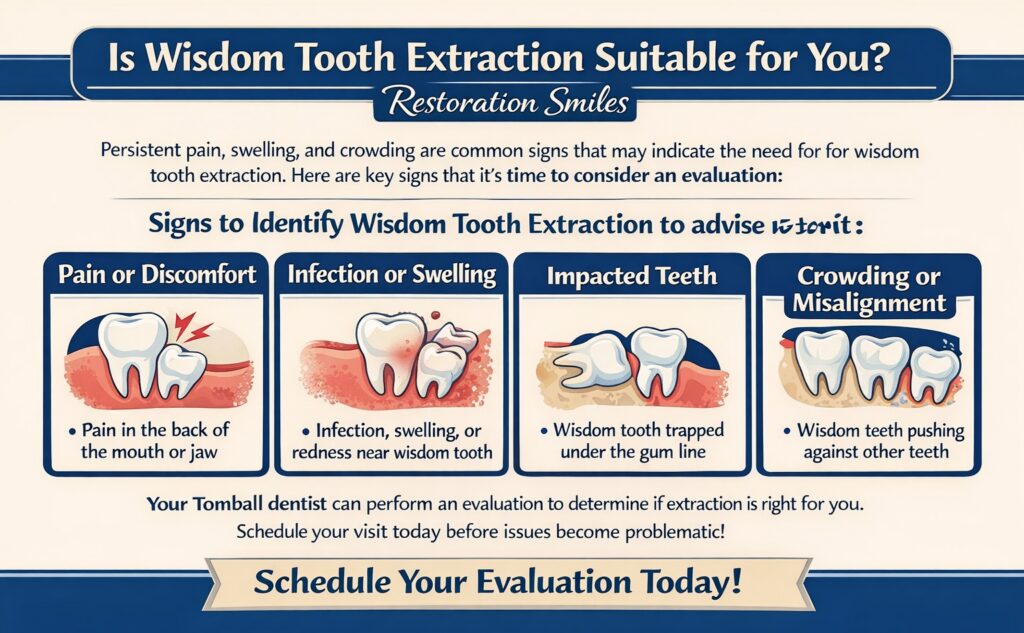
- Crowding or Misalignment: When your wisdom teeth exert pressure on adjacent teeth, resulting in crowding or misalignment, extraction helps preserve the alignment of your smile.
- Cyst Formation or Tumors: It is rare, but impacted wisdom teeth can cause cysts or tumors that destroy bone and nearby tissue. Removing the teeth earlier can prevent these complications.
Your Tomball dentist can evaluate your dental needs and determine if extraction is the right option for you. A routine check-up can help detect problems before they become too severe.
Moving Forward to Comfort and Wellness
If you’re facing pain or discomfort from your wisdom teeth, it’s time to speak with a dental team that you trust. At Restoration Smiles, we provide all the care you need during your procedure and recovery process.
Give us a call today to book an appointment to see if wisdom tooth extraction is suitable for you. Our friendly team will guide you through each step of the process so that you can enjoy a healthier, more comfortable smile.
Questions People Ask About Tooth Extraction
What are the signs that I need a wisdom tooth extraction?
Common signs include pain, swelling, difficulty opening your mouth, or signs of infection around the wisdom teeth. Your dentist can evaluate whether extraction is necessary.
Is the wisdom tooth extraction procedure painful?
The procedure itself is performed under anesthesia, so you won’t feel pain during the extraction. Post-surgery discomfort is manageable with prescribed medications.
How long does it take to recover from a wisdom tooth extraction?
Most patients feel swelling and discomfort for 3-4 days. Full recovery may take a few weeks, depending on the complexity of the extraction.
Can I drive myself home after the extraction?
If you had local anesthesia, you may be able to drive yourself home. However, if you received sedation or general anesthesia, you should arrange for someone to drive you.
How do I manage pain after my wisdom teeth are removed?
Follow your dentist’s aftercare instructions carefully. Over-the-counter pain relievers or prescribed medication can help manage discomfort during the recovery period.
What should I eat after a wisdom tooth extraction?
Stick to soft foods like mashed potatoes, yogurt, and smoothies for the first few days. Avoid crunchy, hot, or spicy foods that may irritate the extraction site.