CLICK HERE TO DOWNLOAD YOUR HEALTHYSTART™ GUIDE


Can Tooth Extraction Relieve Chronic Jaw Pain? Causes, Treatment & What to Expect

Chronic jaw pain can be a constant source of discomfort, but could a simple tooth extraction be the solution? Many people wonder if removing a tooth can alleviate this persistent pain. If you’ve been dealing with aching jaws, clicking sounds, or even difficulty chewing, you’re not alone. Jaw pain is a common issue that many people in the local area experience, often affecting day-to-day activities.
Jaw pain can stem from a variety of causes, but it’s important to recognize that dental issues could be the culprit. Could extracting a problematic tooth bring relief?
This blog will explore the connection between tooth extraction and chronic jaw pain, discussing how dental problems like impacted teeth, infections, or misalignment can contribute to jaw discomfort.
What Causes Chronic Jaw Pain?
Chronic jaw pain is not just a nuisance; it can greatly affect your quality of life. Understanding the root causes of this discomfort is essential in identifying the most effective treatment. There are several common causes of chronic jaw pain, including temporomandibular joint (TMJ) disorders, teeth grinding (bruxism), tooth infections, and dental misalignment.
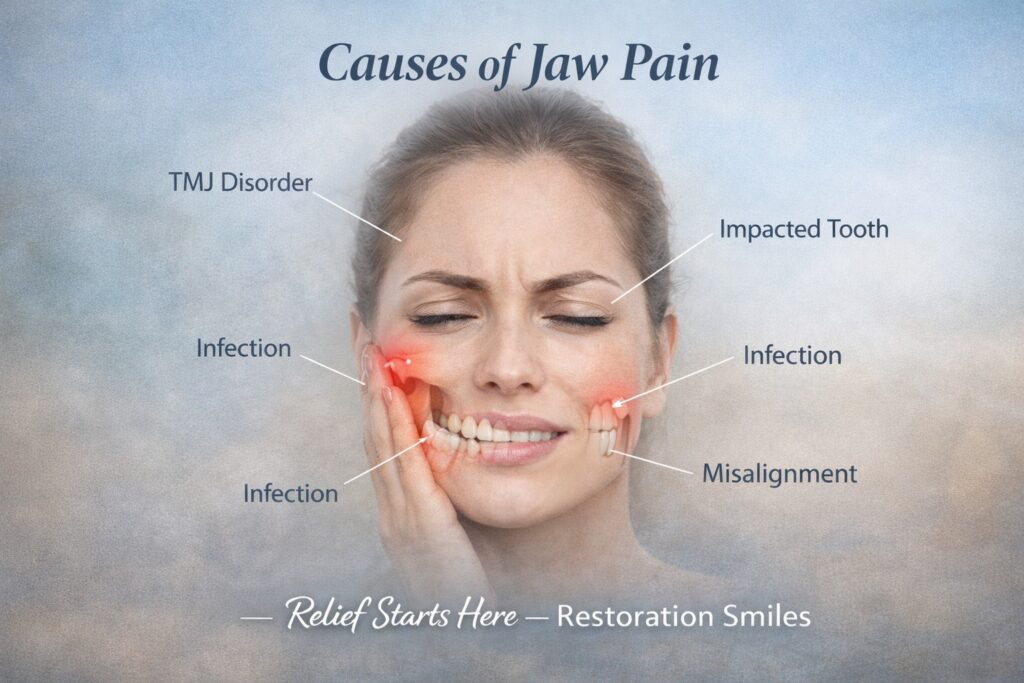
General Causes of Chronic Jaw Pain
- TMJ Disorders: The temporomandibular joint connects the jawbone to the skull, and any dysfunction here can lead to pain, clicking, or even locking of the jaw. TMJ disorders can result from stress, jaw injury, or even poor posture.
- Teeth Grinding (Bruxism): Many people unknowingly grind their teeth while sleeping, which can cause jaw pain over time. Bruxism often stems from stress or anxiety and leads to increased pressure on the jaw, causing muscle soreness and joint discomfort.
- Tooth Infections: Severe tooth decay or abscesses can lead to intense pain in the jaw. An infected tooth may cause inflammation that extends to the surrounding areas, including the jaw.
- Dental Misalignment: Malocclusion (improper alignment of teeth) can also be a significant contributor to chronic jaw pain. When teeth do not come together correctly, it can lead to strain on the jaw muscles, resulting in pain.
Focus on Dental Issues Contributing to Jaw Pain
Several dental issues can directly cause or exacerbate chronic jaw pain, making tooth extraction in Tomball a potential solution. Some of these include:
- Impacted Teeth: Teeth that are unable to emerge fully or properly, particularly wisdom teeth, can cause discomfort, swelling, and jaw pain. These impacted teeth can put pressure on neighboring teeth, causing misalignment and pain.
- Abscesses or Infections: An untreated infection in a tooth or the surrounding gums can spread to other areas, including the jaw. This can lead to intense pain, swelling, and inflammation, affecting your ability to chew and talk comfortably.
- Overcrowding: When there isn’t enough space in the mouth for all the teeth, overcrowding occurs. This can lead to pressure on the jaw, causing discomfort and misalignment.
How Tooth Extraction Can Help
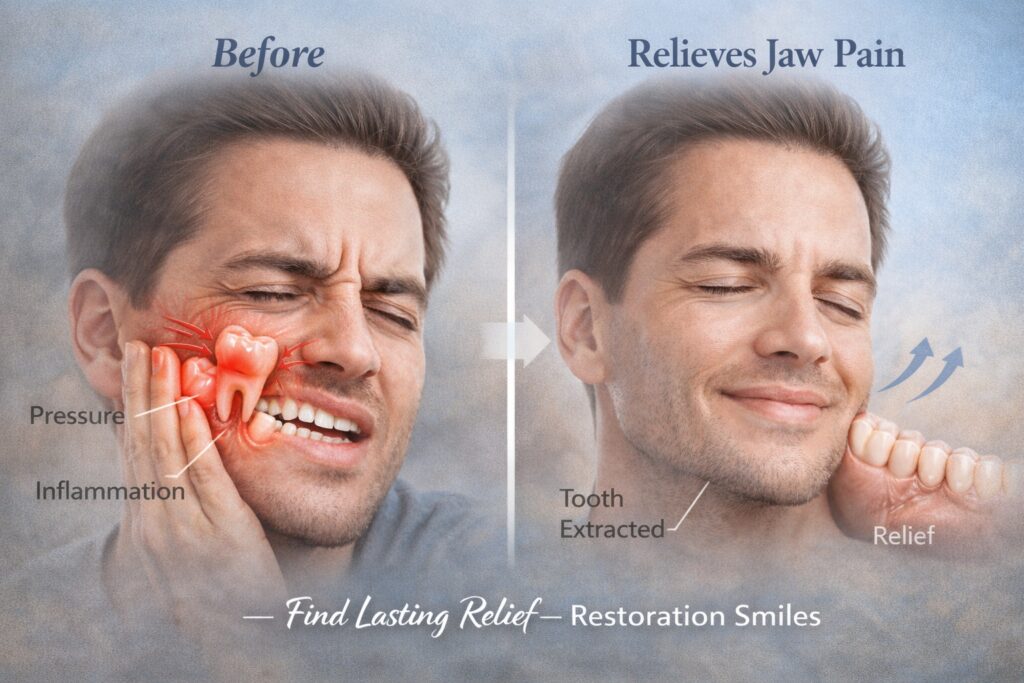
Tooth extraction may sound intimidating, but in certain cases, it is one of the most effective solutions for alleviating chronic jaw pain. When dental issues like impacted teeth, infections, or overcrowding contribute to discomfort, removing the problematic tooth can help relieve the strain on the jaw and improve your overall well-being.
Let’s dive into when tooth extraction is recommended and how it can make a significant difference in your jaw pain.
When Extraction Is Recommended
There are a variety of dental conditions where tooth extraction is recommended as a treatment for jaw pain. While every case is different, tooth extraction is often considered in the following situations:
1. Impacted Teeth:
One of the most common causes of chronic jaw pain is impacted teeth, particularly wisdom teeth. Wisdom teeth are the third set of molars that typically emerge in late adolescence or early adulthood.
However, in many cases, there isn’t enough space in the jaw for these teeth to emerge properly. This leads to what’s known as an “impacted” tooth, where the tooth is stuck beneath the gumline or angled incorrectly.
An impacted tooth can cause a variety of issues, including pain, swelling, gum infection, and jaw discomfort. Because these teeth are often difficult to clean, they can also lead to tooth decay or gum disease. In such cases, removing the impacted tooth can help eliminate the source of the pain, prevent further complications, and allow the jaw to heal.
2. Severe Tooth Infections:
Tooth infections occur when bacteria invade the pulp of the tooth, often due to a deep cavity or trauma. As the infection spreads, it can cause severe pain that radiates to the jaw and surrounding areas. In some cases, an abscess (a pus-filled pocket) may form near the root, intensifying the pain.
While root canal therapy is often used to treat tooth infections, in cases where the infection is severe or has spread to other areas, tooth extraction may be the best option. By removing the infected tooth, the source of the infection is eliminated, preventing further pain and allowing the jaw and surrounding tissues to heal. This can provide significant relief for those who have not found relief from antibiotics or other treatments.
3. Overcrowding:
Overcrowding occurs when there is not enough space in the jaw for all the teeth. This often happens when a person has extra teeth or when teeth come in crooked due to a lack of space. The result is pressure on the jaw and surrounding teeth, which can lead to chronic jaw pain, discomfort while chewing, and even difficulty with speech.
In some cases, overcrowding can cause a misalignment of the bite, putting added stress on the jaw joint (TMJ) and leading to discomfort or even headaches. Tooth extraction can be an effective solution to relieve overcrowding by removing one or more teeth, which can help create space in the mouth, correct the alignment, and reduce the strain on the jaw. This is often part of orthodontic treatment, where the goal is to straighten the remaining teeth and restore proper bite function.
4. Tooth Damage or Decay Beyond Repair:
In some situations, a tooth may be so damaged by decay or trauma that it cannot be saved with restorative treatments like fillings or crowns. A tooth that is severely decayed or broken can cause constant pain and may also affect the surrounding teeth and jaw. When this happens, extracting the tooth may be necessary to prevent further damage and provide relief from the pain.
In addition, a damaged or decayed tooth can lead to infection or abscesses, which only worsen the pain. In these cases, removing the problematic tooth helps clear the infection and reduces pain in the affected area.
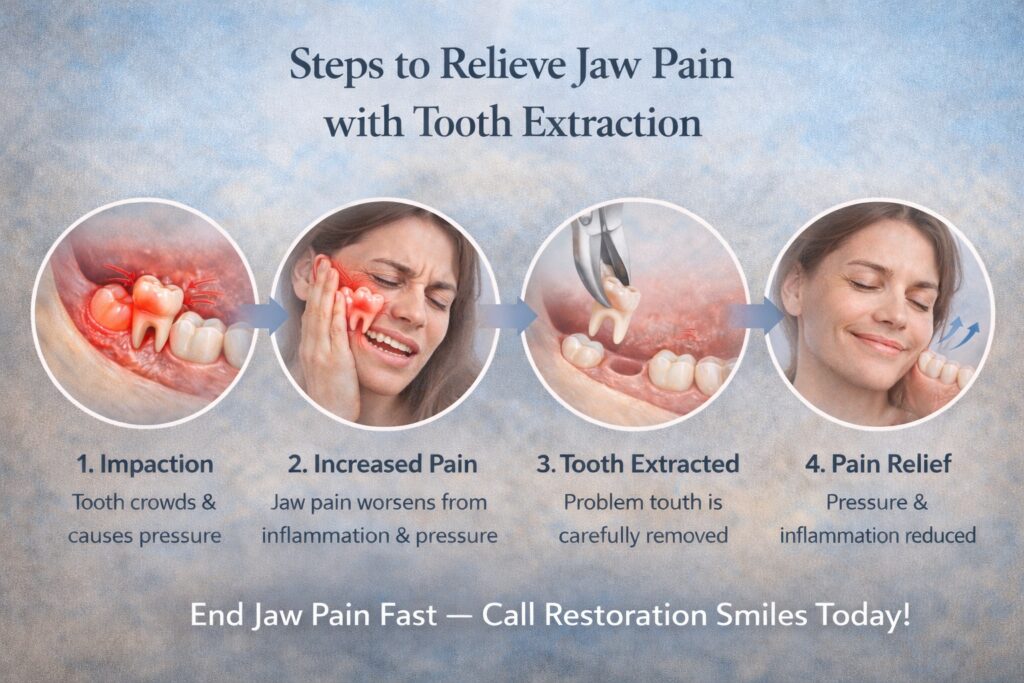
Impact on Jaw Pain
Tooth extraction can provide significant relief for chronic jaw pain, especially when the pain is caused by one of the conditions listed above. Here’s how removing a problematic tooth can positively impact your jaw:
1. Relieving Pressure and Inflammation:
When a tooth is impacted, infected, or misaligned, it can place undue pressure on the surrounding teeth, gums, and jaw. This constant pressure can lead to inflammation, muscle tension, and jaw pain.
By removing the source of the pressure, the inflammation can subside, allowing the jaw muscles to relax and heal. This relief is often immediate, as the pain is directly linked to the problematic tooth.
For example, with impacted wisdom teeth, the pressure on neighboring teeth can cause discomfort in the jaw, leading to pain while chewing or talking. Once the impacted tooth is removed, the pressure is released, and the jaw can return to its natural, pain-free state.
2. Preventing Further Complications:
An infected or decayed tooth can cause much more than just jaw pain. If left untreated, the infection can spread to the surrounding gums, teeth, and even the jawbone.
This can lead to more serious health issues, including bone loss and abscesses that may require more invasive treatment. Removing the infected tooth prevents these complications from worsening and provides relief from the pain.
3. Improving Alignment and Function:
In cases of overcrowding or misalignment, a tooth extraction in Tomball can help realign the teeth and improve overall bite function. When teeth are crowded, they can rub against each other in ways that cause strain on the jaw, leading to chronic pain.
Extracting one or more teeth creates space, allowing the remaining teeth to shift into a more comfortable position. This process can reduce the stress on the jaw and prevent pain caused by misaligned teeth.
For people who suffer from jaw pain due to teeth grinding (bruxism), overcrowding may exacerbate the problem by preventing the teeth from resting in their natural positions. By removing excess teeth and correcting the alignment, tooth extraction can contribute to better bite function and a reduction in grinding-related jaw pain.
4. Faster Healing and Recovery:
While the idea of tooth extraction may seem daunting, the procedure itself is generally quick and well-tolerated. Most patients experience significant pain relief after the extraction site has healed, which typically takes a few days to a few weeks.
During the healing process, the body focuses on repairing the area around the extracted tooth, and most of the inflammation and discomfort caused by the tooth is alleviated.
In many cases, patients find that they experience an immediate reduction in jaw pain after the extraction, particularly if the tooth was the primary source of the discomfort. This quick relief can be a welcome change for those who have been living with chronic jaw pain for an extended period.
Consulting with Your Dentist or Oral Surgeon
Before jumping to conclusions about tooth extraction, it’s crucial to consult with a dental professional who can diagnose the root cause of your jaw pain. At Restoration Smiles, our team of qualified professionals will thoroughly examine your teeth and jaw to determine the best course of action.
Professional Advice
A dentist or oral surgeon will evaluate your symptoms, take X-rays, and assess the alignment of your teeth and jaw. They’ll help identify whether tooth extraction is necessary or if other treatments could address the underlying problem. Sometimes, other options like orthodontic treatments, TMJ therapy, or a mouthguard for teeth grinding may be more appropriate.
Personalized Treatment Plan
Every case is unique, and a personalized treatment plan ensures that your jaw pain is treated in the most effective way possible. Your dentist will discuss all available options, answer your questions, and help you make an informed decision about the best treatment for your specific situation. Whether it’s extraction or another treatment, you can trust that the professionals at Restoration Smiles will provide you with a solution tailored to your needs.
Tooth extraction can indeed be a solution for chronic jaw pain, but it’s not always the first or best option for everyone. Whether it’s an impacted tooth, an infection, or overcrowding, removing the tooth can relieve pressure, reduce inflammation, and alleviate discomfort. However, it’s essential to consult with a dental professional to determine whether extraction is the right solution for your specific situation.
At Restoration Smiles, we are dedicated to helping you find relief from chronic jaw pain. Schedule an appointment with us today to assess your condition and explore your treatment options. Let us help you get back to a pain-free life, one smile at a time!
What People Want to Know
Can tooth extraction relieve jaw pain?
Yes, extracting a problematic tooth, like an impacted or infected one, can relieve pressure, inflammation, and pain in the jaw.
How long does it take to recover after a tooth extraction for jaw pain?
Recovery usually takes a few days to a week, depending on the complexity of the extraction and your healing process.
Will I feel immediate relief after the extraction?
Many people experience relief from jaw pain shortly after the extraction, especially if the tooth was the source of the discomfort.
How do I know if tooth extraction is the right treatment for my jaw pain?
A consultation with your dentist or oral surgeon is necessary to evaluate your condition and determine if tooth extraction is the best solution for your specific situation.
Can a tooth extraction fix jaw pain caused by teeth grinding?
Yes, if overcrowding or misalignment is contributing to teeth grinding, extraction can help create space and alleviate the pressure on the jaw.