CLICK HERE TO DOWNLOAD YOUR HEALTHYSTART™ GUIDE


How Do You Tell If Gum Pain Needs Emergency Treatment at Restoration Smiles?

Gum pain usually begins without any noise (signs). A little tenderness here, some swelling there — and before you know it, you’re lying awake at 2 a.m., wondering whether to tough it out or call your dentist first thing in the morning. The truth is, not every ache demands urgent attention, but some absolutely do. Knowing the difference could save your tooth — and in rare cases, your overall health.
At Restoration Smiles in Tomball, TX, the team sees patients who waited too long just as often as those who came in early. This guide will help you read the signals your gums are sending, so you can make the right call without second-guessing yourself.
Why Gum Pain Deserves Your Attention
Your gums aren’t just background tissue. They’re the foundation that holds your teeth in place, and they’re deeply connected to your systemic health. According to the CDC, nearly half of American adults aged 30 and older have some form of periodontal disease. Yet many people still dismiss early warning signs because the discomfort seems manageable.
The problem? Oral infections don’t stay put. Bacteria from an untreated gum abscess can enter your bloodstream and, in severe cases, spread to the jaw, neck, or even the heart. That’s not meant to alarm you — it’s meant to give you the full picture so you treat gum pain with the seriousness it warrants.
When Gum Pain Is Just Gum Pain
Not every instance of gum sensitivity is a dental emergency. Sometimes, the culprit is simple and fixable on your own:
- Aggressive brushing that irritates gum tissue
- A popcorn hull or food particle lodged between teeth
- New flossing habits that cause temporary inflammation
- Canker sores near the gumline
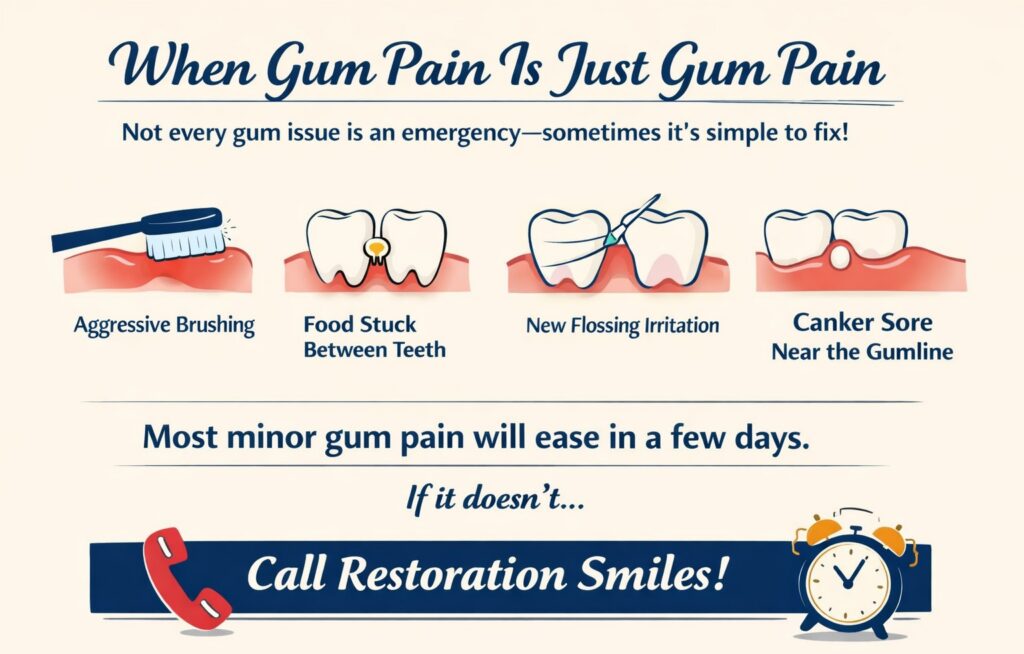
These situations typically resolve within a few days with gentle oral hygiene and saltwater rinses. If they don’t — that’s your cue to pick up the phone.
Signs Your Gum Pain Is a Dental Emergency
Certain symptoms cross the line from uncomfortable to urgent. If you notice any of the following, reaching out to an emergency dentist in Tomball, TX is the right move.
1. A Visible Abscess or Pimple-Like Bump on the Gum
A dental abscess is a pocket of infection, and it’s not something your body can fight off alone. If you see a swollen, raised bump on your gum — especially if it’s filled with pus or feels warm to the touch — that’s an abscess. It needs professional drainage and antibiotic treatment right away. Left alone, abscesses can become dangerous quickly.
2. Severe, Throbbing Pain That Doesn’t Ease Up
Dull, intermittent aches are often manageable. But throbbing, relentless pain that gets worse when you lie down? That’s typically a sign of acute infection or significant nerve involvement. Over-the-counter pain relievers might take the edge off temporarily, but they won’t address the underlying cause.
3. Swelling in Your Jaw, Face, or Neck
Facial swelling alongside gum pain is a red flag. It suggests that infection may have spread beyond the tooth and gum into surrounding tissue — a condition called cellulitis in severe cases. If swelling is making it hard to open your mouth, swallow, or breathe, go to an emergency room immediately alongside contacting your dentist.
4. Bleeding That Won’t Stop
Some bleeding during flossing isn’t unusual when you’re first getting into the habit. But gums that bleed spontaneously, bleed heavily, or continue bleeding after 10–15 minutes of gentle pressure may indicate advanced periodontal disease or another underlying issue that needs prompt evaluation.
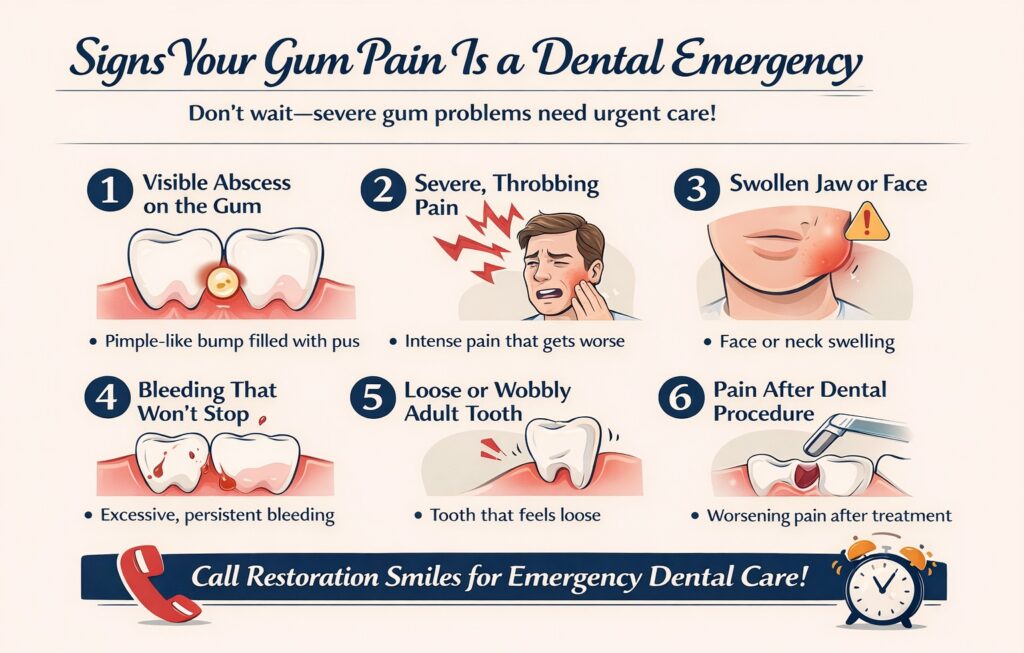
5. A Loose Tooth in an Adult
Adult teeth don’t become loose without a serious reason — trauma, severe bone loss from periodontal disease, or infection are the most common causes. If a tooth feels wobbly and the gum around it is painful, don’t assume it will stabilize on its own.
6. Gum Pain After a Recent Dental Procedure
Some discomfort following a tooth extraction or other procedure is expected. But sharp, worsening pain in the days after — especially with a bad taste in your mouth — can point to dry socket or post-surgical infection. Both conditions respond well to early treatment and poorly to delay.
What Restoration Smiles Can Do for You
Restoration Smiles serves patients across Tomball and the surrounding areas. The practice is designed to handle urgent dental situations without the long wait times that make emergencies even more stressful. Whether you’re dealing with a suspected abscess, sudden tooth pain, or traumatic gum injury, the team is equipped to assess, diagnose, and treat you the same day in most cases.
If you’re a Tomball resident — or you work in the area — having a trusted dental practice already on your radar before an emergency happens makes a real difference. You don’t want to be Googling options while your jaw is swollen.
What to Do While You Wait for Your Appointment
Once you’ve called and are on your way, a few things can help manage discomfort in the interim:
- Rinse with warm salt water to reduce inflammation and clean the area
- Take ibuprofen or acetaminophen as directed on the label to ease pain
- Avoid very hot, cold, or hard foods that can aggravate the area
- Don’t pop or squeeze any visible abscess — this can spread infection
- Apply a cold compress to the outside of your cheek for 15–20 minutes at a time to reduce swelling
These steps won’t replace treatment, but they can make the wait more bearable.
The Connection Between Gum Health and Overall Health
This part often surprises people. Research published in the Journal of Periodontology has linked chronic gum disease to an increased risk of cardiovascular disease, poorly controlled diabetes, preterm birth, and respiratory conditions. Your mouth is a window into your body’s overall health, and chronically inflamed gums send signals of inflammation throughout your system.
That’s a compelling reason to treat gum emergencies seriously — and to keep up with regular cleanings and checkups even when nothing hurts. Most gum problems are entirely preventable with consistent care and early intervention.
Don’t Wait on Gum Pain That Isn’t Getting Better
Your instincts are usually right. If something feels wrong with your gums and it’s not improving after a day or two, trust that feeling and get it checked. Dental emergencies don’t always announce themselves dramatically — sometimes they creep up quietly until they’re impossible to ignore.
The team at Restoration Smiles is ready to help when you need it most. Call the office to schedule an appointment or ask about same-day availability. Your gum health — and your peace of mind — are worth it.
Frequently Asked Questions About Gum Pain and Dental Emergencies
Q: Can I take the antibiotics I have at home to treat a gum infection?
A: It’s not recommended. Using antibiotics without a proper prescription — or finishing a leftover course — can contribute to antibiotic resistance and may not even target the specific bacteria causing your infection. A dentist will prescribe the right medication in the right dose.
Q: How long can I wait before seeing a dentist for gum swelling?
A: If swelling is mild and improving, 24–48 hours may be acceptable. But if swelling is spreading, you have a fever, or you’re having trouble swallowing or breathing, seek care immediately — same day.
Q: Does gum pain always mean I have gum disease?
A: Not necessarily. Gum pain can stem from many sources: infection, trauma, hormonal changes, vitamin deficiencies, or even ill-fitting dental appliances. Only a proper examination can confirm the cause.
Q: What’s the difference between a gum abscess and a tooth abscess?
A: A gum (periodontal) abscess forms in the pocket between a tooth and gum, often linked to gum disease. A tooth (periapical) abscess originates at the root tip, usually from decay or a cracked tooth reaching the pulp. Both are serious and require prompt treatment — the main difference is how they’re treated.
Q: Will emergency dental visits cost significantly more than regular appointments?
A: Emergency visits may involve additional fees for after-hours or same-day care, and the treatment required will affect the total. Many dental offices, including Restoration Smiles, can discuss payment and financing options so cost doesn’t prevent you from getting the care you need.