CLICK HERE TO DOWNLOAD YOUR HEALTHYSTART™ GUIDE


Sudden Sensitivity to Cold: Is It a Cavity or an Emergency?

Have you ever taken a sip of ice water and felt an unbearable shock in your tooth? It’s uncomfortable, but is it just a cavity, or could it be something more serious? Sudden sensitivity to cold can catch you off guard, leaving you wondering whether it’s a simple annoyance or a warning sign that something’s wrong. The sharp, quick pain can range from mild discomfort to something hard to ignore.
While cold sensitivity is common, it can also be a sign of underlying issues that need attention. This blog will help you determine whether your sensitivity is just a minor inconvenience or if it signals a more serious dental emergency.
What Causes Sensitivity to Cold?
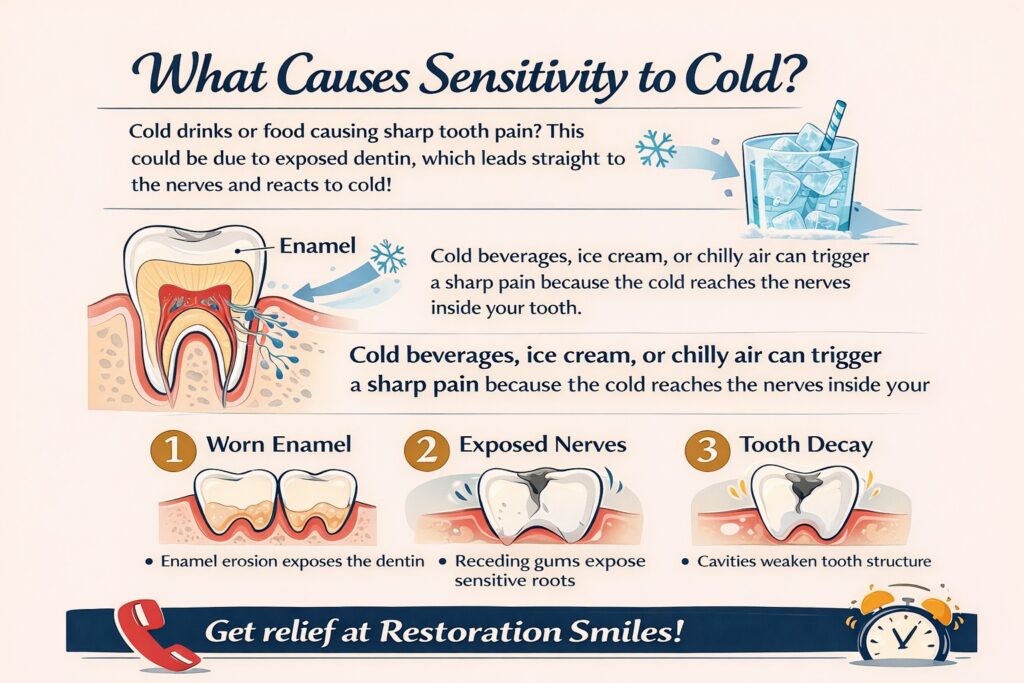
Tooth sensitivity occurs when the underlying layer of your tooth, called the dentin, becomes exposed. Dentin is full of tiny tubules that lead directly to the nerves inside your tooth. When your enamel is worn down or your gums recede, it exposes these tubules to external stimuli like hot, cold, or sweet foods. Cold temperatures trigger a sharp pain because the nerves inside your tooth react to the sudden temperature change.
There are several common causes of cold sensitivity, including:
- Worn Enamel: Enamel is the protective outer layer of your teeth, and once it’s worn down (often due to acidic foods, brushing too hard, or teeth grinding), the dentin becomes more vulnerable to temperature changes.
- Exposed Nerves: Gum recession can expose the roots of your teeth, which are not covered by enamel, making them more sensitive to cold.
- Tooth Decay: Cavities can weaken your tooth structure, causing discomfort when exposed to cold.
Understanding the causes can help you address your sensitivity and prevent further damage to your teeth.
When Cold Sensitivity Could Be a Sign of a Cavity
A cavity is one of the most common causes of cold sensitivity. When a cavity develops, it creates a hole in your tooth that exposes the dentin and the nerves within. The cold temperature can cause the nerves inside the tooth to react, leading to discomfort.
As the cavity progresses, the pain may worsen and become more frequent. Along with cold sensitivity, you might notice other signs, such as:
- Pain While Chewing: If chewing or biting down causes pain, it could indicate that a cavity has reached deeper layers of your tooth.
- Visible Holes or Dark Spots: If you spot dark spots or holes in your teeth, it’s a sure sign that you have a cavity.
- Sensitivity to Hot Foods: If cold foods cause discomfort, and you also experience pain with hot foods, it could mean the cavity has advanced further into the tooth.
If you suspect a cavity, it’s important to see an emergency dentist in Tomball as soon as possible to prevent it from worsening and causing further damage.
When Cold Sensitivity Signals an Emergency
Not all cold sensitivity is linked to cavities. Sometimes, it can signal a more serious issue that requires immediate dental attention. In these cases, the pain is often more intense and persistent.
Signs that cold sensitivity may indicate an emergency include:
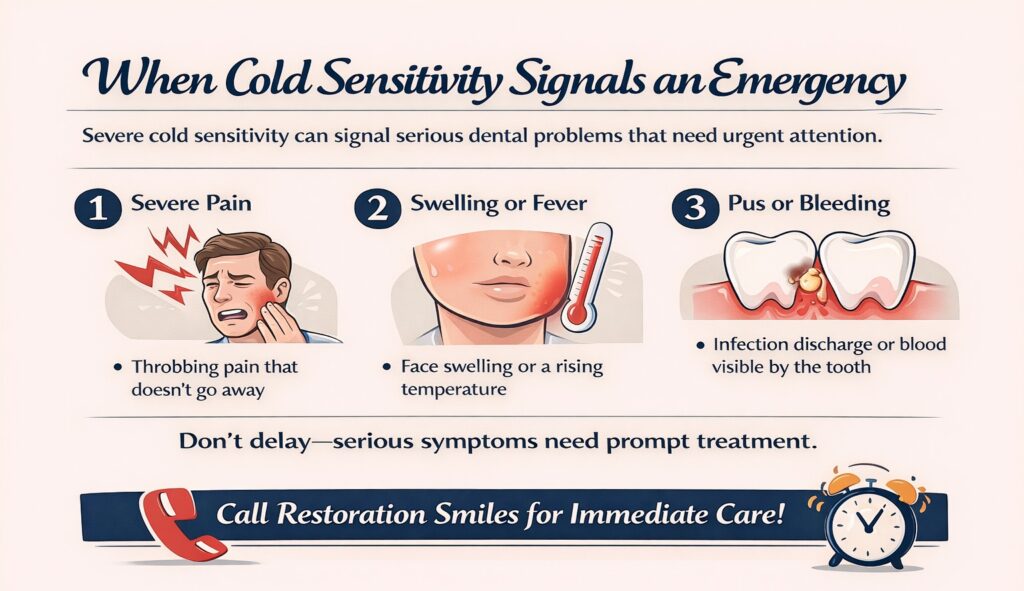
- Severe Pain: If you experience intense, throbbing pain that doesn’t subside after a few seconds, it could be a sign of an infection or abscess in the tooth or gums.
- Swelling or Fever: Swelling around the tooth, gums, or jaw, along with a fever, suggests an infection that requires immediate care.
- Pus or Bleeding: If you notice pus or blood coming from your gums or around the affected tooth, it indicates a serious infection, often requiring a root canal or other urgent treatment.
Ignoring these signs can lead to complications such as tooth loss or the infection spreading, so it’s essential to seek emergency dental care right away.
How to Tell the Difference Between Regular Sensitivity and an Emergency
Not all tooth pain is created equal. Here’s how to determine whether your sensitivity is normal or if it signals a dental emergency:
- Severity of Pain: Mild sensitivity usually goes away after a few seconds, but if you experience severe, throbbing pain that lasts longer, it could be a sign of an infection or deeper issue.
- Duration of Sensitivity: Temporary sensitivity to cold may be caused by something as simple as a recent dental cleaning or a new filling. However, if the sensitivity lasts for more than a few days, it’s time to see a dentist.
- Other Symptoms: Pay attention to additional signs. If your cold sensitivity is accompanied by fever, swelling, or visible damage to the tooth, it’s likely more serious.
When in doubt, it’s always safer to get checked by an emergency dentist in Tomball. They can quickly determine the cause and advise on the best course of action.
What to Do If You Have Sudden Sensitivity to Cold
If you experience sudden cold sensitivity, here’s what you can do right away:
- Avoid Cold Foods: Limit your intake of cold foods and beverages to prevent further discomfort.
- Use Toothpaste for Sensitive Teeth: Toothpastes specifically designed for sensitive teeth can help reduce the pain by sealing the tubules in the dentin.
- Stay Away from Acidic Foods: Acidic foods like citrus can worsen sensitivity, so avoid them if you’re experiencing discomfort.
- Cover the Tooth Temporarily: If a cavity is causing the sensitivity, covering it with a dental wax or sealant temporarily may help protect the tooth from further exposure.
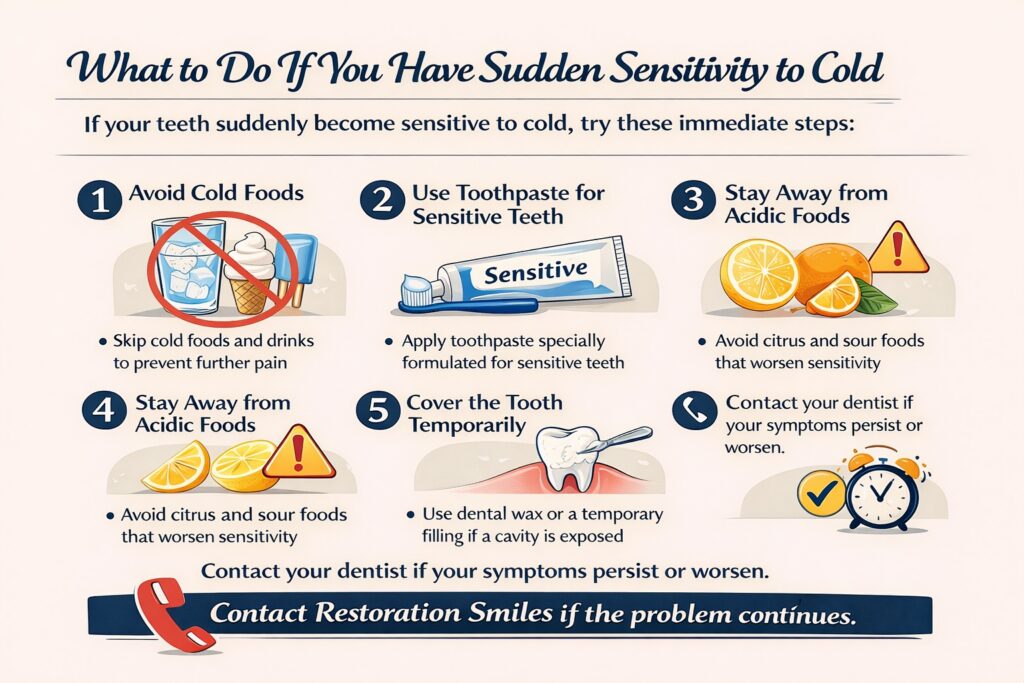
If the sensitivity doesn’t improve or worsens, it’s best to contact a dentist immediately. An evaluation can help you determine the underlying cause and prevent it from turning into a more serious issue.
How a Dentist Can Help Diagnose and Treat Sensitivity
When you visit a dentist for cold sensitivity, they’ll perform a thorough examination to determine the cause of the problem. This may include:
- X-Rays: X-rays help identify cavities, abscesses, and any structural damage to your teeth.
- Visual Examination: Your dentist will look for visible signs of cavities, tooth wear, or gum recession.
- Probing: The dentist may gently probe your teeth to check for any signs of decay or damage that could be causing your sensitivity.
Once the cause is identified, treatment options will vary:
- Fillings: If a cavity is to blame, the dentist will likely recommend a filling to seal the hole and prevent further damage.
- Root Canals: For infections, a root canal may be necessary to save the tooth and prevent the spread of the infection.
- Fluoride Treatments: If the sensitivity is caused by worn enamel, fluoride treatments can help strengthen the enamel and reduce sensitivity.
Cold sensitivity can range from a minor nuisance to a major dental emergency. Recognizing the difference between the two is essential for protecting your oral health. If you experience sudden or severe sensitivity, don’t wait. Contact Restoration Smiles today for an appointment.
Our professional team can help diagnose the cause of your discomfort and provide the necessary treatment to restore your smile. Book your consultation now and take the first step toward a pain-free, healthy mouth!
People Also Ask
Can cold sensitivity be a sign of gum disease?
Yes, gum recession caused by gum disease can expose the tooth’s roots, leading to sensitivity to cold. Early treatment can help prevent further damage.
Is it normal for teeth to be sensitive to cold after a dental cleaning?
Mild sensitivity is common after a cleaning due to the removal of plaque, but it should subside in a few days. If the pain persists, contact your dentist.
Can tooth sensitivity go away on its own?
In some cases, mild sensitivity may subside on its own, especially if it’s caused by temporary factors like acidic foods. However, persistent sensitivity should be evaluated by a dentist.
What can I do to prevent tooth sensitivity in the future?
Maintain good oral hygiene, use a soft-bristle toothbrush, avoid acidic foods, and consider using toothpaste for sensitive teeth to prevent future sensitivity.
Does a root canal help with cold sensitivity?
Yes, a root canal can treat severe tooth sensitivity caused by infection or decay by removing the infected pulp, providing relief and preventing further damage.