CLICK HERE TO DOWNLOAD YOUR HEALTHYSTART™ GUIDE


What to Expect During and After Your Dental Implant Surgery
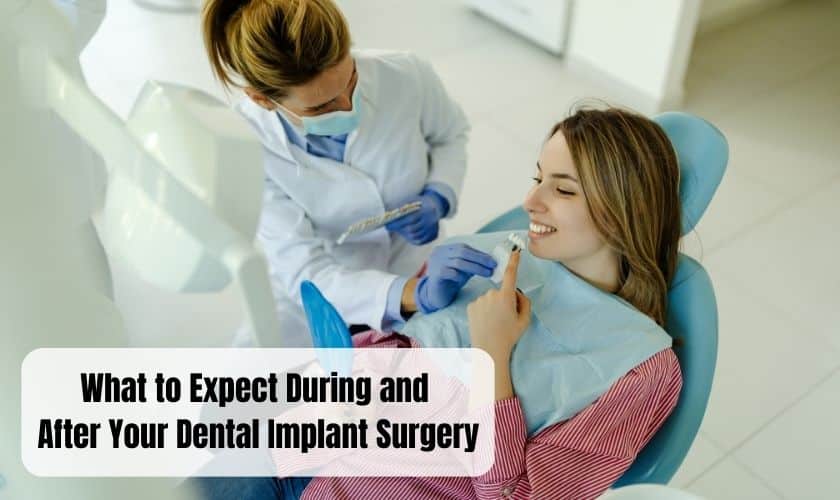
Are you considering dental implant surgery but feeling nervous about what to expect? Fear not! We’re here to guide you through the process and ease your mind. In this blog post, we’ll cover everything from preparation before surgery to recovery after the procedure. You can rest assured that with our expert advice, you’ll be well-informed and ready for a successful dental implant experience. So sit back, relax, and let’s dive in!
What is Dental Implant
Most people who have dental implant surgery don’t need any sedation. You may be given a local anesthetic to numb the area around your implant site. Once the anesthesia has taken effect, your surgeon will make a small incision in your gum tissue and place the titanium post into your jawbone.
If you’re having more than one implant placed, your surgeon will space out the surgery so that each implant has time to heal before the next one is placed. This process can take several months.
After your implant is placed, you’ll likely need to wait three to six months for the bone to fuse to the metal post. During this time, you may have a temporary tooth placed on top of your implant. Once your permanent tooth (or teeth) is ready, it will be attached to the titanium post.
What to Expect During Surgery
The surgery itself is usually pretty straightforward. First, your dentist will numb the area around the tooth that will be receiving the implant. Then, they will make a small incision in your gums and insert the implant into your jawbone. Once the implant is in place, they will close up the incision with stitches. The whole process usually takes less than an hour.
After the surgery, you can expect some swelling and discomfort. Your dentist will likely prescribe you pain medication to help with this. They will also give you specific instructions on how to care for your mouth as it heals. This includes things like not smoking and avoiding hard or chewy foods. It usually takes about six weeks for the implant to fully heal.
Aftercare Tips for a Smooth Recovery
Assuming your surgery went well and there are no complications, you can expect a smooth recovery. Here are some aftercare tips to ensure a smooth recovery:
– take it easy for the first few days and don’t overdo it
– eat soft foods and avoid chewing on the surgical site
– brush and floss your teeth regularly but be gentle around the surgical site
– take any prescribed antibiotics or pain medication as directed
– keep your follow-up appointments with your dentist
Possible Risks and Complications of Dental Implant Surgery
There are a few possible risks and complications associated with dental implant surgery. These include:
Infection: Infection at the site of the implant is a rare but serious complication. If you develop an infection, you will need to have the implant removed and the area treated with antibiotics.
Nerve damage: There is a small risk that the nerves in your jaw could be damaged during dental implant surgery. This could lead to numbness or tingling in your lips, tongue, or chin.
Sinus problems: Dental implants can occasionally interfere with the sinuses. This is more likely to occur if the implants are placed in the upper jaw. If you have sinus problems after dental implant surgery, you may need to have the implants removed.
Bone loss: Over time, there is a small risk that the bone around the dental implant could start to deteriorate. This could eventually lead to the implant becoming loose or falling out completely.
How Long Does It Take for Implants To Heal?
After your implant surgery, it is normal to have some swelling and bruising around the surgical site. The swelling should start to go down after the first few days. You may also have some numbness in your lips, gums, or chin. This is because the surgeon had to move your nerves out of the way during the procedure. The numbness should go away within a few weeks.
It takes about 3-6 months for the implants to fully heal and integrate with the bone. During this time, you should be careful not to put too much pressure on the implants as they are still healing. After they have healed, you will be able to use them just like your natural teeth!
Maintenance and Care Tips For Long Lasting Results
To ensure your dental implant lasts for many years, it is important to take good care of it. Here are some tips on how to keep your implant in top shape:
Brush and floss your teeth regularly. This will help remove plaque and food particles that can accumulate around the implant and cause infection.
Visit your dentist or oral surgeon for regular checkups. They will be able to monitor the health of your implant and make sure it is functioning properly.
Avoid chewing hard foods or using your teeth as tools. This can damage the implant or cause it to loosen over time. If you have a habit of clenching or grinding your teeth, ask your dentist about getting a mouthguard to wear at night.
If you experience any pain or discomfort around the implant site, contact your dentist right away. They will be able to determine if there is an issue with the implant that needs to be addressed.
Having dental implant surgery is a major decision, and it can be intimidating. However, once you take the time to understand what to expect before, during, and after your procedure, you will be more at ease about undergoing such a life-changing experience. Dental implants are one of the most popular solutions for replacing missing teeth and with proper care can last many years or even decades. With that in mind, if you have been considering getting dental implants then we would encourage you to speak with your dentist today to find out if they are right for you!
FAQs
How long does the dental implant surgery take?
The entire dental implant surgery usually takes about an hour to an hour and a half. This includes the time it takes to numb the area, place the implant, and close up the incision site.
How long will I have to be off work after my dental implant surgery?
Most people can return to work within a day or two after their dental implant surgery. However, this will depend on your occupation and how well you are feeling. If your job is physical or requires heavy lifting, you may need to take more time off.
Will I have any pain after my dental implant surgery?
You may experience some discomfort and swelling after your surgery, but this can be controlled with medication. Your surgeon will also give you specific instructions on how to care for your incision site.