CLICK HERE TO DOWNLOAD YOUR HEALTHYSTART™ GUIDE


From Partial to Full: Choosing the Right Type of Denture for You
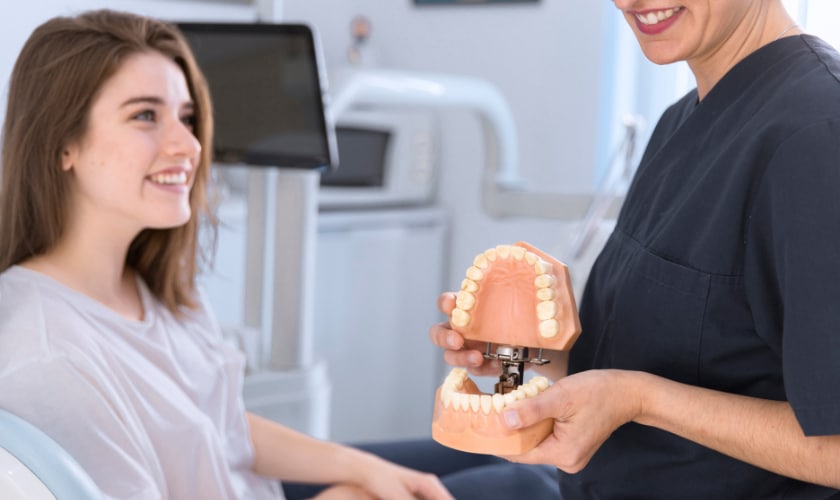
Are you tired of feeling self-conscious about your missing teeth? Dentures can provide a solution to help restore your confidence and improve your overall oral health. But with so many different types of dentures on the market, how do you know which one is right for you? In this blog post, we’ll explore the various options available from partial to full dentures and help guide you in making an informed decision that fits your lifestyle and budget. Say goodbye to gaps and hello to a brighter smile!
Denture Types
When you lose all or most of your teeth, it’s time to consider dentures. Dentures are false teeth that can be removed and put back into your mouth as needed. They’re made to look like your natural teeth and give you the ability to eat and speak normally. There are two types of dentures: partial and full.
Partial dentures are used when you still have some natural teeth remaining. They fill in the gaps left by missing teeth and prevent other teeth from shifting out of place. Full dentures are used when all of the natural teeth are gone. They rest on the gums and are held in place with suction or a dental adhesive.
If you’re considering dentures, your dentist can help you choose the type that’s right for you based on your needs and budget.
Benefits of Partial Dentures
If you’re considering dentures, you may be wondering if partial dentures are the right choice for you. Partial dentures can offer a number of benefits, including:
1. They Can Help You Save Money
Partial dentures are typically more affordable than full dentures. If you’re on a budget, partial dentures may be the best option for you.
2. They’re Less Invasive Than Full Dentures
Partial dentures require fewer dental appointments and less time in the dentist’s chair than full dentures. They’re also less likely to cause irritation and soreness in your mouth.
3. They Can Be Removed When You Want
Unlike full dentures, partial dentures can be removed when you want. This can be helpful if you want to take them out for cleaning or if you want to give your mouth a break from wearing them.
4. They Look Natural
Partial dentures are designed to look natural and blend in with your existing teeth. With proper care, they can last for many years without anyone knowing that you’re wearing them.
Benefits of Full Dentures
Full dentures offer a number of benefits over partial dentures. First, they are more stable and less likely to slip or move around in your mouth. Second, they provide better support for your cheeks and lips, helping to keep your face from looking sunken in. Third, they are easier to keep clean than partial dentures, since there are no gaps where food can become trapped. Finally, full dentures can restore your ability to eat and speak normally.
How to Choose the Best Option for You
When you’re considering dentures, it’s important to choose the type that will work best for you and your lifestyle. Here are some factors to keep in mind when making your decision:
1. How many teeth do you need to replace?
If you’re only missing a few teeth, partial dentures may be the best option for you. These can be removable or fixed in place with dental implants. If you’re missing all of your teeth, full dentures will give you the most natural-looking smile.
2. What is your budget?
Partial dentures tend to be less expensive than full dentures, but the cost will also depend on the materials used and whether you opt for dental implants. Be sure to discuss all of your options with your dentist so you can make the best decision for your budget.
3. How often do you want to remove your dentures?
If you opt for removable partial or full dentures, you’ll need to take them out regularly for cleaning. This can be a hassle if you’re always on the go. Fixed dentures are permanently attached and don’t need to be removed, but they may not be an option if you have a limited budget.
4. What is your oral health like?
If you have good oral health, any type of denture should work well for you. However, if you have gum disease
Denture Care & Maintenance
If you have dentures, it’s important to take good care of them. Here are some tips for denture care and maintenance:
– Rinse your dentures after eating and before going to bed.
– Brush your dentures daily with a soft-bristled toothbrush and nonabrasive toothpaste.
– Soak your dentures overnight in a solution recommended by your dentist or prosthodontist.
– Be careful when handling your dentures. Handle them over a sink full of water or a soft towel in case they drop.
– Don’t try to adjust or repair your own dentures. See your dentist or prosthodontist if you think they need to be adjusted or repaired.
Conclusion
There are many types of dentures available to choose from, and it is important that you find the one that best suits your needs. Partial dentures can be ideal for those with a few missing teeth, while full dentures are better suited for those who have lost all their natural teeth. With so many options out there, it’s important to take your time and do some research in order to make sure you get the right type of denture that will fit comfortably and look great.
FAQs
Can I sleep in my dentures?
Yes, you can sleep in your dentures, but it’s important that you remove them at least once a day to clean them thoroughly. Soak them in water or a mild cleaning solution overnight so they don’t dry out and become brittle.
Can I eat anything with my dentures?
You should avoid hard or sticky foods at first and gradually add them back into your diet. Avoid chewing gum, eating tough meats, or crunching on nuts and seeds as these can damage your dentures.
How long does it take to get used to wearing dentures?
It may take a few weeks to get used to wearing your new dentures. During this time, you may experience some discomfort and gum soreness. Your speech may also be affected as you learn to articulate with your new teeth. Practice reading aloud and try different foods to get used to eating with your new teeth. The more you wear them, the more comfortable they will become.